About Dog Aggression
ABOUT MDT — AGGRESSIVE DOG SERVICES
MDT was designed by a professional with decades of academic and field experience for one purpose: to give the dogs he loves better care and better behavioral outcomes. We are here as a resource.
Most people who reach out to us aren’t looking for obedience tricks or dominance theories. They’re dealing with fear, embarrassment, and the feeling that they’re losing control of their dog’s behavior. You want a solution yesterday. You’re overwhelmed. And that emotional pressure makes you more vulnerable to outlandish claims and quick‑fix promises.
We don’t deal in claims.
We deal in long‑term results.
If you simply want to talk through your dog’s behavior with someone who has actually been there, we’re here for that. We don’t hand out training techniques — that’s what amateurs do to seem credible. Techniques don’t fix biology, pressure, threshold, or recovery. They just hide the problem.
We help you plan for the reality of getting you and your dog on track.
MDT — AGGRESSIVE DOG Research
You know I like to base my theories on fact. The reality is that research on the effectiveness of dog‑aggression training is splintered into small categories based on “types” of aggression. I’ve tested this theory for over fourteen years and the result is consistent: there are no canine categories of aggression.
The dog‑training industry, and the certification programs that support it, assume that dog behavior is driven by triggers, stimuli, or experiences. My research concluded that canines — including their ancestors such as wolves, coyotes, and foxes — respond to the amplitude range and intensity of a sensory event. They do not treat sound, scent, or movement as single measures the way humans do. They measure a range of qualities within the event.
So a sound to us is a single noise.
To a dog, it is vibration, pressure, amplitude, and direction simultaneously.
MDT — What does this have to do with your dog?
When your dog runs at a fence and begins to defend it, the dog is not thinking like a human. It makes a choice based on sensory dynamics you and I are not even aware exist. Dogs respond to sound as vibration, pressure, amplitude, and direction all at once — not as a single noise the way humans do.
The same is true for scent. Humans smell one thing. Dogs smell a full chemical map of the other animal — its stress level, confidence, agitation, illness, and overall state. What we call anxiety, aggression, or friendliness are human words for universal chemical states created in any animal with an amygdala. None of this comes from “higher brain functions” or psychology. It comes from biology.
To sum up the conclusions from decades of research on typical dog‑aggression training, the results are simple. E‑collars, compared to other training collars, produce only short‑term or temporary behavioral changes. This is consistent across decades of research — it is not a marketing tool or a canine‑religion position. And yes, many people confuse dog training with a firmly held personal belief system.
Research across species, not just dogs, supports a simple fact: the more diverse the method — meaning no dog‑training tricks or well‑known training techniques used as the foundation — combined with medical intervention when necessary, produces the best long‑term results.
To sum up the conclusions from decades of research on typical dog‑aggression training, the results are simple. E‑collars, compared to other training collars, produce only short‑term or temporary behavioral changes. This is consistent across decades of research — it is not a marketing tool or a canine‑religion position. And yes, many people confuse dog training with a firmly held personal belief system.
Research across species, not just dogs, supports a simple fact: the more diverse the method — meaning no dog‑training tricks or well‑known training techniques used as the foundation — combined with medical intervention when necessary, produces the best long‑term results.
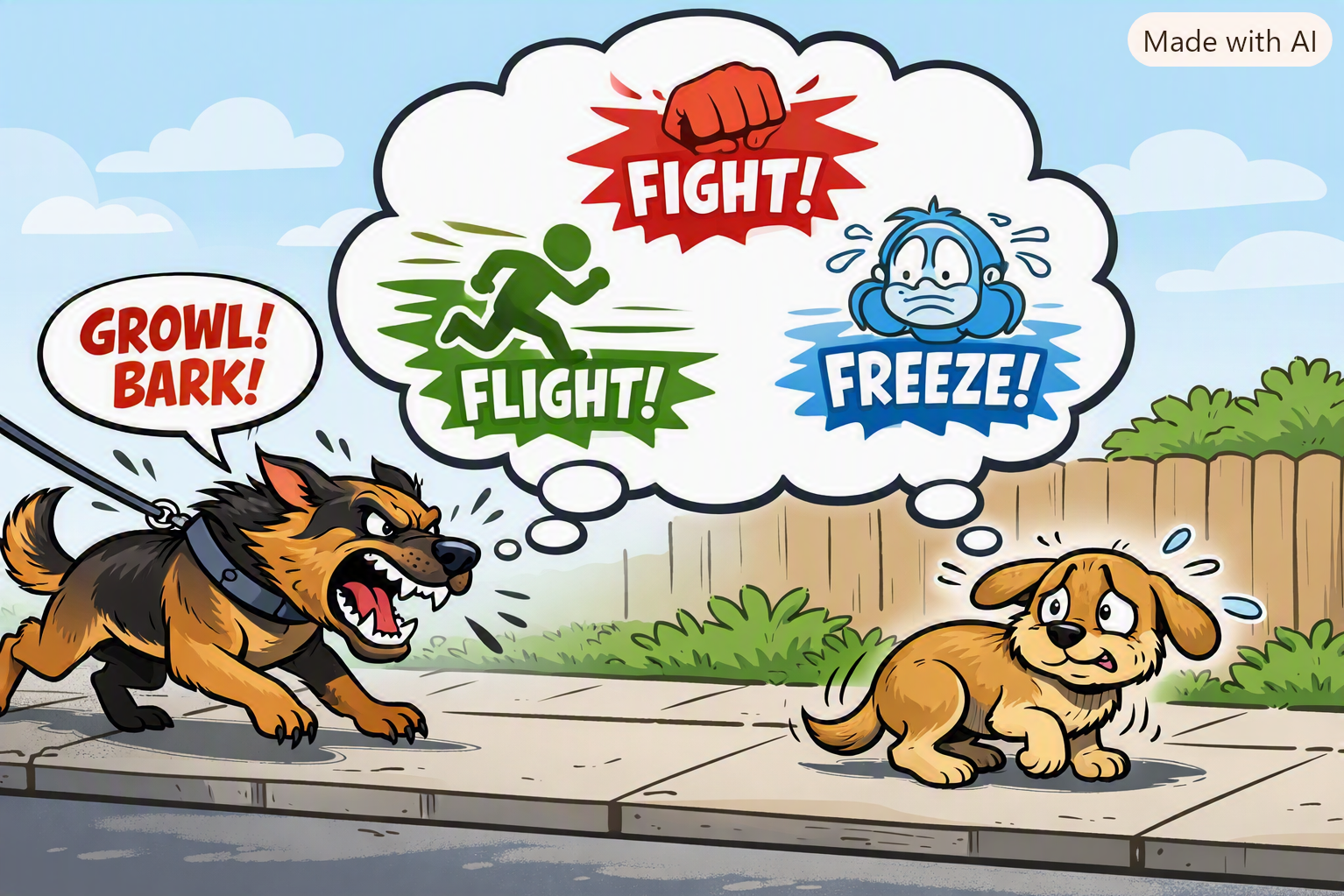
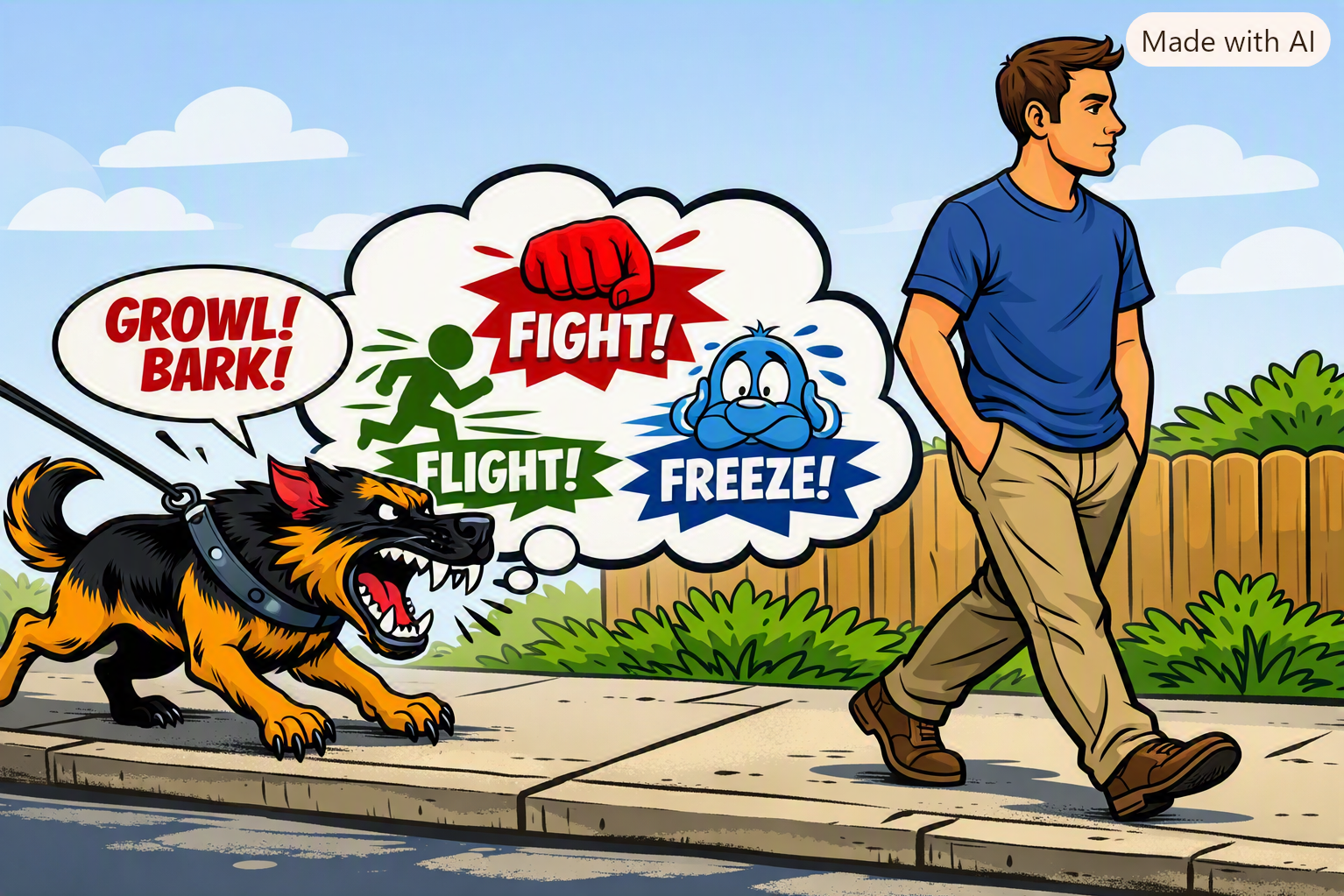
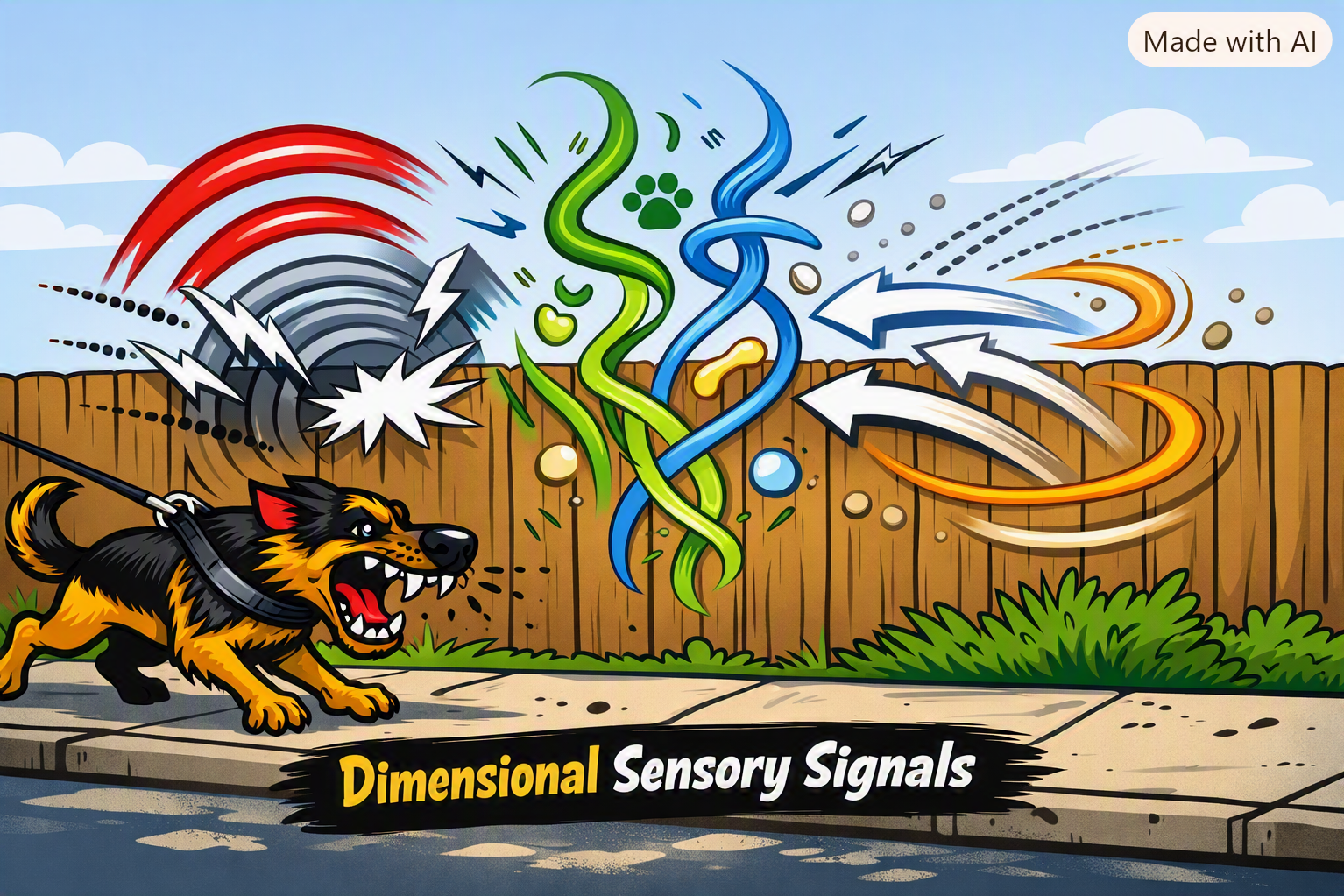
The single cause of All dog behavior
is the
Dimensions of Canine Sensory Measure
Why does my dog bark?
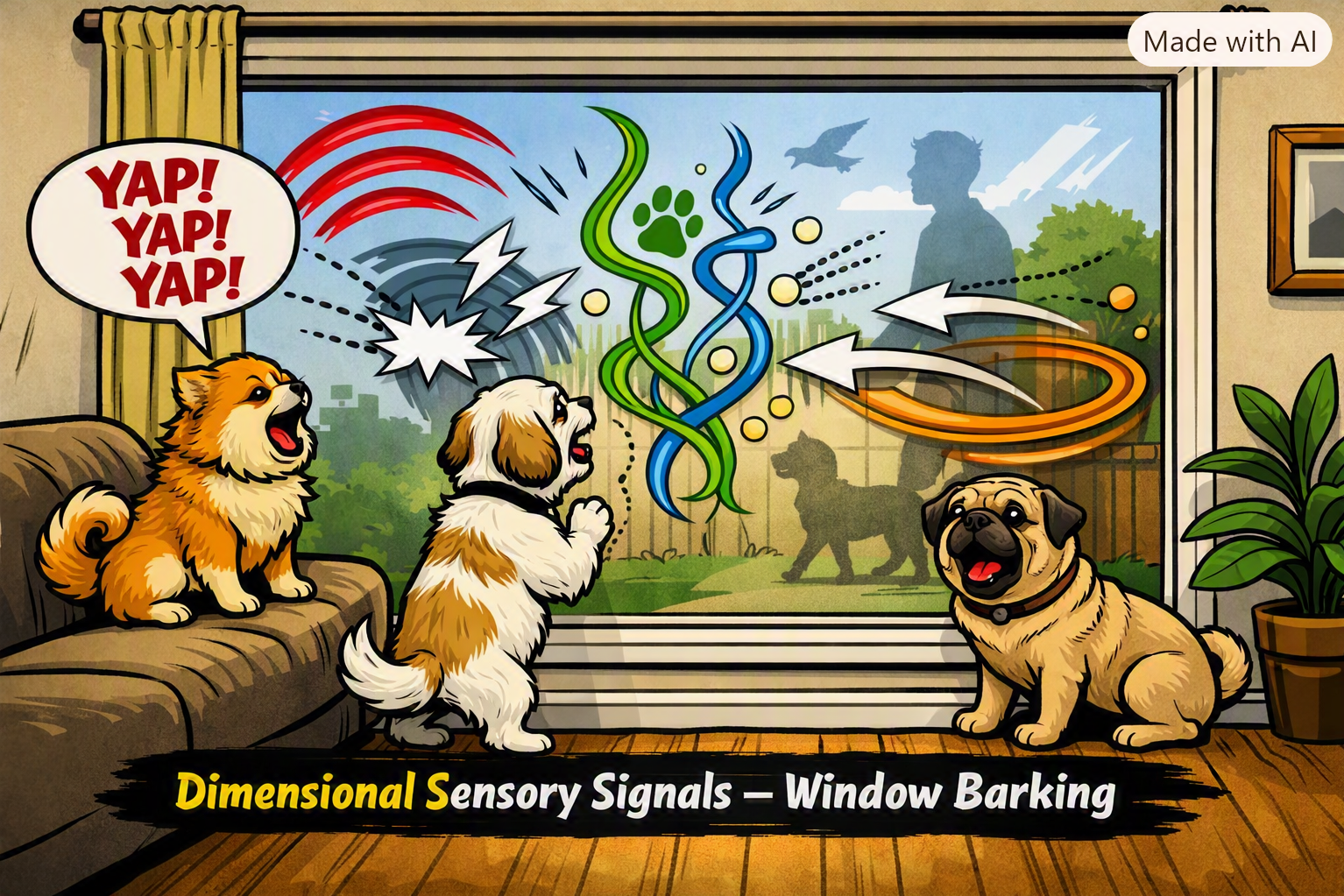
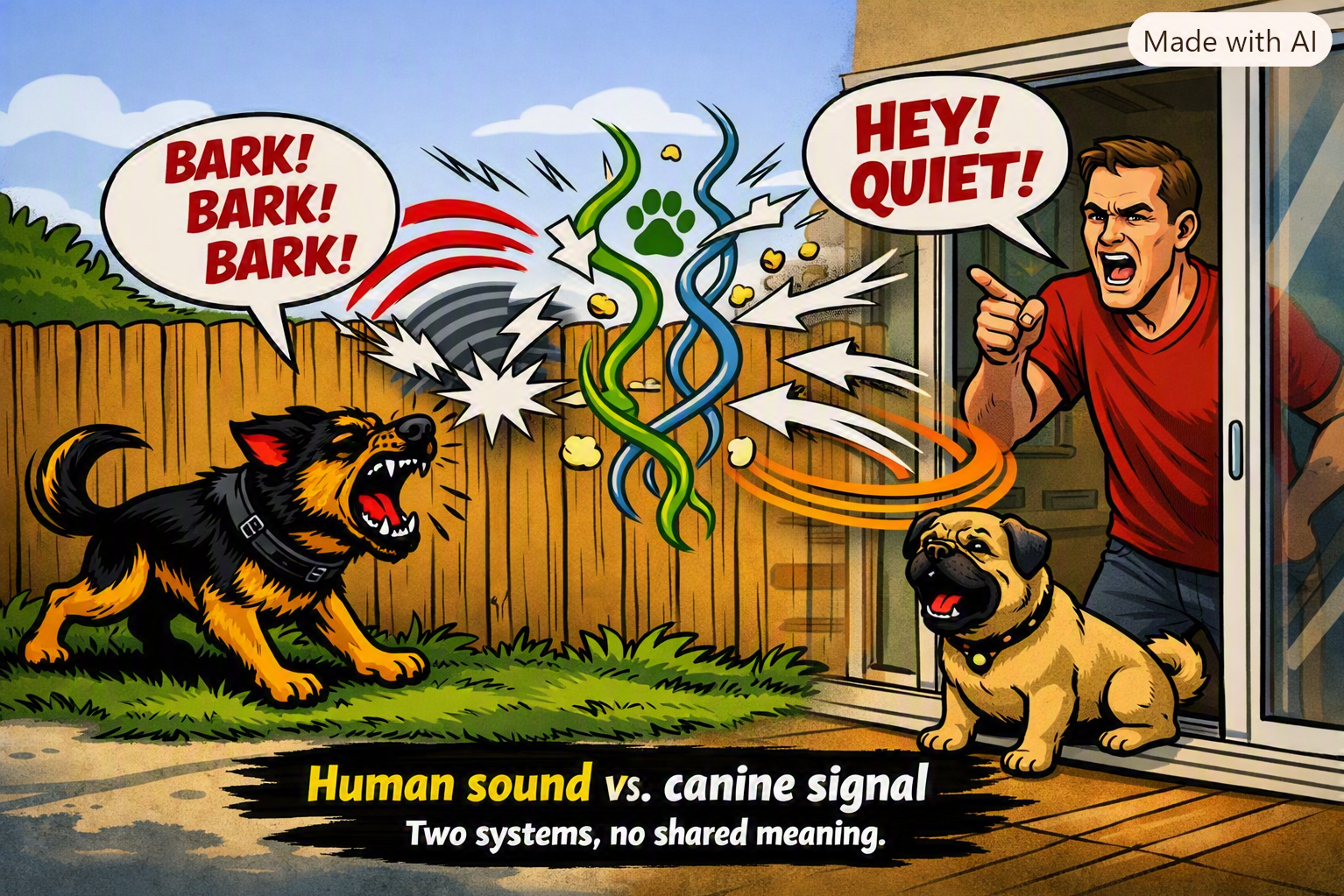
Dog Braking at the window?
Dog Barking in the yard?
Isn’t this easier to understand than the idea of “types of dog aggression”?
The things that frustrate or embarrass us about our dog’s behavior are based on human social norms, not canine norms. We hear a sound and decide whether it matters. Your dog doesn’t have that filter. It isn’t a mindless creature reacting to stimuli — it’s responding to sensory information the way you respond to emotion.
Your dog barks for the same reason you raise your voice.
It pulls on the leash for the same reason you start walking faster, talking faster, or moving abruptly.
The difference is speed and awareness: your dog processes far more sensory data than you do, and often you’re not paying attention to the signals it’s sending — movement, posture, micro‑expressions — not words or tone.
Most of this happens outside human sensory range, so we wonder why our dog “did that” or why it doesn’t “think before it acts.” But it does.
A dog’s barking is a signal, not a thoughtless noise. It can express aggression, assertion, over‑excitement, or happiness. Dogs don’t vocalize the way humans do — that’s a misconception. They send dimensional sound messages that we perceive only as blunt, timed sound waves and vibrations. To other dogs, those signals carry precise meaning and are used to emphasize movement, micro‑movement, or alert others to sensory data they may have missed.
So when your dog barks constantly in the yard or the house, it’s likely responding to sensory measures you can’t detect. Humans think in association — “my dog barks when…” — but dogs don’t. Knowing the cause often makes owners reluctant to eliminate the behavior; instead, they look for a trick or device to stop it. That’s the most common reason training tools are used: they don’t change the dog — they force the dog.